Posts

YEAR 2: MISE EN SCENE

Image
  There's no denying the importance of mise en scéne in filmmaking. Truly, it elevates film from just a record of movements and dialogue set to a sweeping score to an art form with depth, greater meaning, and purpose. In a translation from French to English, Mise en scéne means (quite literally): In short, it means to set the stage! This was originally coined in reference to theater. When speaking of film, the scéne or stage refers to everything in front of the camera, including set design, lighting, and actors. It may also be used in reference to the overall effect of how it all comes together for the viewer. As you are designing your own collaborative films, and as you are viewing your films of study this month, please complete the following for this blog discussion and exploration:  1. Read this article, including clicking the links within for the informational videos on mise en scéne:   https://www.lightsfilmschool.com/blog/mise-en-scene-in-film-afk  2. Choose on...

SOULS ON A ROAD: A Japanese Landmark in Early Filmmaking

Image
  Hailed as "the first landmark film in Japanese history" by film critic Mark Cousins,  Souls on the Road  is a film to which many students and scholars of modern filmmaking give a hard pass.  Some criticize the film as offering a patchy narrative and overly melodramatic character portrayals.  It has also been criticized as being "messy" by modern standards, in terms of directing, lighting, camera angles, and in its unconventional, non-linear storytelling. However, all of these criticisms can also be viewed as groundbreaking in these very areas. Once again, scholars, Context reigns as King!  It is imperative to note that at the time this film was made in Japan, live musicians played traditional instruments to one side of the screen, while a narrator or troupe of narrators called "Benshi" elaboratively explained ("setsumei") the action of the film and its dialogue during the screening.  When intertitles arrived in Japan, Benshi would often incorpo...

NON-LINEAR NARRATIVES & SLIDING DOOR PHILOSOPHIES: Breaking Rules and Making Your Mark (Year 2)

Image
You need to know the rules of writing.  That way, when you break them, you'll know why. A non-linear narrative in storytelling can be key to helping your story stand out.  So...what exactly IS a non-linear narrative?  It is a technique where events are portrayed out of chronological or traditional story order; the pattern of events jumps around.  It is also called the disjointed or disrupted narrative.  Click here to watch a complete definition of the non-linear narrative and how it is used.   Why do writers and filmmakers use it?  Sometimes, it is used to fill in character development in a creative and unique way.  Other times, it is used to hook in the audience--to shake things up a bit and get your story noticed.  Stories that are told in reverse or divergent points of view or paths juxtaposed against each other (like in Sliding Doors)  get noticed because they are different; they put the viewer to work and get them involved in ...

THROUGH THE LENS: A Comparative Look at Joe Wright's A Darkest Hour & Steven Spielberg's Saving Private Ryan

Image
 This week, as we are working on finalizing our Comparative Studies of film, I thought it might be a worthwhile exercise to look at two very accomplished, perfectionistic directors who LOVE looking at the world and reinterpreting it through the lens in creative, beautiful ways.  In the spotlight of our Blog for Year 1 this month are two sensational films:  Saving Private Ryan  and The Darkest Hour , directed by American Master Steven Spielberg and British Visionary Joe Wright.  Let's first take a look at both directors stylistically... Joe Wright:   In an interview with Hollywood Reporter,  Joe Wright confessed, "I'm not keen on method actors because I'm a bit of a method director in the sense that I have to feel their emotions, and I have to identify very, very closely with the character and see the world through the same lens as they see the world.  So really, those characters are always an extension of myself."  Wright went on to explain t...

A WHOLE NEW WORLD: An Exploration of Foreign Films and Cultural Contexts (Year 1 Scholars/Instructors Only)

Image
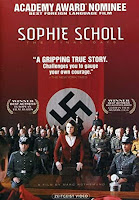
  "Foreign films teach you a new language, but it's not the language you think.  It's the language of cinema" - Vera Blasi, Academy Member. One of the great rewards of watching foreign films is the infinite ways it can open up the world for you as a viewer.  You identify with a character from another time and place.  You share their thoughts and feelings--their hopes and fears.  A sense of intimacy and humanity is created through the experience and we go from an "Us vs. Them" mentality to a "We are Them, They are Us" way of thinking. This month, there are five films made by foreign directors on our screening schedule: Sophie Scholl: The Final Days  (German - trailer link: https://www.youtube.com/watch?v=x14U3R3-dFE ), The Pianist  (Polish - trailer link: https://www.youtube.com/watch?v=BFwGqLa_oAo ), Three Colors: Blue  (France/Czech Republic - trailer link:  https://www.youtube.com/watch?v=Zxz-FQvRxbY ), Life is Beautiful  (Italian - t...

ALL'S FAIR: A Reflective Study on the Style, Structure, Purpose, and Impact of War Films (Year 2 Scholars/Instructors only)

Image
As we know as film students and enthusiasts, film is one of the most all-encompassing, expressive art forms there is.  It utilizes sound, visuals, music, and motion to engage all of the senses and communicate deep themes, experiences, and meaning like no other medium.  Perhaps that is why whether you are documenting the events and moments or telling a story, film is the most effective way to communicate the horror, heartbreak, heroism, and sacrifice of war. The war genre in film is defined by its use of actual combat fighting or conflict as the primary plot or background for the action of the film.  Typical elements in war film plots include POW camp experiences and escapes, submarine/air/land/naval warfare, espionage, personal stories of heroism, tough trench and infantry experiences, or male-bonding adventures.  Themes are centered around main ideas of combat, survival in brutal conditions, escape, gallant sacrifice and struggle, studies of futility and inhumanity ...

THE REAL & THE ROMANTIC: Blending Genres and Shaping Stories

Image
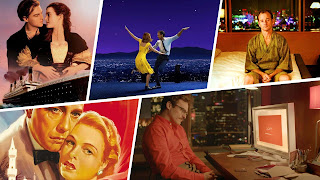
 Realism: the artistic attempt to recreate life as it is in the context of an artistic medium. The artist seeks to report and reveal what he/she sees as accurately and honestly as possible. Romanticism: a movement encompassing ideas like the free play of the mind, and imagination above all else.  It embraces how things might or even should be, leaving the viewer free to interpret, surmise, and surrender to what they have felt as well as seen.  Looking over these definitions, I started to think about how these ideas, movements, philosophies, classifications--whatever we wish to call them-- translate into film.  Eventually, I realized they reminded me that it is always of value to effectively explore the enigma of human nature when considering artistic expression in any of its forms. When some people go to look for inspiration, they flip open a magazine, click through Pinterest, or take to the streets for some old-fashioned people-watching.  While I'll not likely ...